Blog Post number 4
Published:
This is a sample blog post. Lorem ipsum I can’t remember the rest of lorem ipsum and don’t have an internet connection right now. Testing testing testing this blog post. Blog posts are cool.
Quantitative Geneticist
less than 1 minute read
Published:
This is a sample blog post. Lorem ipsum I can’t remember the rest of lorem ipsum and don’t have an internet connection right now. Testing testing testing this blog post. Blog posts are cool.
1 minute read
Published:
Sometimes, all it takes is applying one more time, whether for that dream scholarship, job, opportunity, or country you dearly desire. In 2016, while working as a graduate researcher, I longed to engage in more intensive scientific work, but like many students from African nations, funding was a major barrier. I had applied for numerous scholarships without success, yet I kept trying. When the Norman Borlaug Leadership Enhancement in Agriculture Program (Borlaug LEAP) opened again, I decided to apply a second time. This time, I was shortlisted, passed the interview, and became a fellow. Only later did I learn that my initial application had been incomplete, which explained why I wasn’t selected the first time. That second attempt changed everything. Through the fellowship, I joined the Plant Sciences Department, University of California, Davis, and the Genome Center, where I experienced cutting-edge science firsthand. It was a transformative period in my academic journey. For context, the Borlaug LEAP fellowship here, supports graduate students from developing countries both abroad and in the U.S. who demonstrate strong leadership potential in agriculture and related fields. The program enhances thesis research by pairing fellows with mentors at a U.S. university and a CGIAR center. Unfortunatley, the program closed after an impactful 10 years in 2016.
1 minute read
Published:
This week, I find myself reflecting deeply on hope and gratitude to God, and to everyone who has helped me along the way. Like many aspiring scholars, I applied to graduate school without funding, spending a full year drafting proposal after proposal as I prepared for the unknown journey ahead.
less than 1 minute read
Published:
Today, I was honored to speak to 5th grade students from the Nuesto Mundo Community School in Wisconsin, Madison. It was a great opportunity to be asked questions like, what it was for me growing up as a child back in Nigeria, food that I love, favorite American eatery, sports I played and still loved and why I decided to study plants. It was exciting explaining to them in simple terms, what I do as a plant scientist and the contributions plant scientists make to create rich and nutritious fruits and food. They made me feel like a child again and this brought back good memories from my childhood. The black history month (February) every year is a national history month to celebrate the contributions of black American patriots who have helped shaped the nations history.
1 minute read
Published:
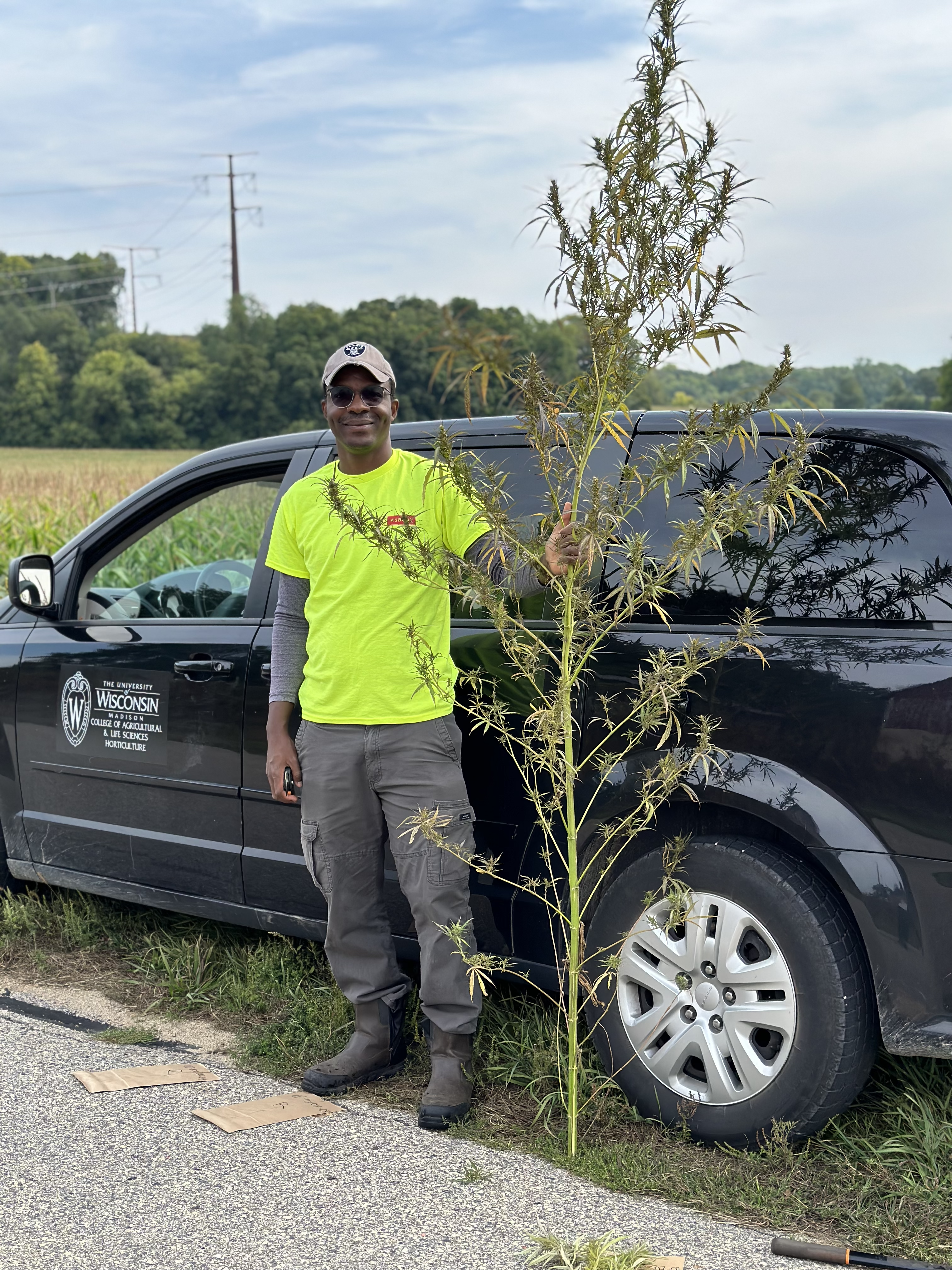
I joined the Ellison Lab in June 2022 and spent a little over three years there. My primary research focus was on the Collection, Pre-Characterization, and Preservation of American Hemp Germplasm. This work contributed directly to building the newly established USDA–ARS Hemp Germplasm Repository at Cornell AgriTech, an initiative made possible after nearly a century of prohibition and regulatory restrictions. Through these efforts, I helped assemble a diverse collection of more than 1,800 accessions from 12 U.S. states. This genetic diversity will serve as a valuable resource for accelerating hemp breeding programs across the U.S., North America, and beyond. The collection provides an essential reservoir of useful alleles and superior traits for improving Cannabis for medicinal, fiber/grain, and cannabinoid uses. After 3 years and 3 months here, I now join the University of Wyoming’s Sheridan Research and Extension Center, where I am establishing and leading mung bean breeding program for both grain and forage use. In addition, I’ll be supporting the Center’s ongoing research on several other field and forage crops, including sugar beet, popping bean, field pea, chickpea, cowpea, sagebrush, and alfalfa, among others.